

Good People by Patmeena Sabit
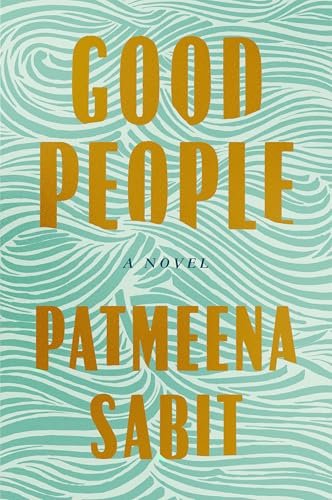
The Sharaf family are an immigrant success story. Escaping war-torn Afghanistan, through grit and hard work they find themselves wealthy, respected, living in an exclusive neighbourhood in Northern Virginia. Zorah, the eldest daughter, seems destined for great things — the apple of her father's eye, attending a prestigious school, the embodiment of everything the family worked so hard to achieve.
But tragedy befalls them, and suddenly the Sharafs find themselves at the mercy of the court of public opinion, caught in the eye of a media storm. Cultures collide. The American dream turns into a nightmare.
Race Riots
I was reading this book in the midst of the now annual race riots in the North of Ireland. The timing felt apt. Pogroms are not a new thing in this part of the world, and there was something pertinent about sitting with a novel about an Afghan family navigating prejudice, suspicion, and the gap between how a community sees itself and how it treats outsiders — while the same ugly currents were running through the streets a few miles up the road. It gave the book an added edge that I hadn't anticipated.
Format
What I loved most about this book is the format. It's told entirely in interview style — short chapters, multiple voices — through the eyes of people outside the Sharaf family. Neighbours, friends, classmates, lawyers, journalists, people who encountered them on the night the tragic events took place.
We never once hear directly from the family themselves. It's a format that makes everything feel disturbingly real, and there are real-life cases you'll find yourself drawing parallels with. I'm doing my best in this review not to give anything away.
You know from the opening pages that something terrible has happened. But the tragedy itself isn't revealed until halfway through. The first half is devoted entirely to building a portrait of the family through other people's eyes — and I'll be honest, there were moments when I wanted it to move faster. I was eager to get to the heart of it. But looking back, I can see exactly what Sabit is doing. She is quietly, carefully shaping your assumptions. By the time the tragedy is revealed, you have already formed opinions — and those opinions will colour everything you read in the second half.
I flew through the second half, and I changed my mind more than once.
Mystery
It's a mystery in the sense that you want to know what happened. But it isn't a thriller in the conventional sense, as the outcome almost isn't the point. What matters is how you arrived at your conclusion — and what that says about you. How much of a role does race and tradition play in how we assign guilt? What about wealth? The way someone dresses, speaks, behaves?
Running through all of it is the question of assimilation — the pull of old traditions, the pressure of family and community, the desire to hold onto where you came from, set against the freedoms and temptations of a new country. It’s especially difficult for the second generation , those born into this new land of opportunity. The clash of those two worlds is where real tension lives.
Good People
Who and what are the ‘good people’? Is it the people I referred to in the early part of this review, who see themselves as ‘defenders’ of their community, ‘protecting’ their way of living?
Is it the parents who want to bring their children up in a certain way that upholds their traditions and values, in an increasingly immoral world?
And in the book you have all those who give their opinion on the family - they are all decent, upstanding ‘good’ people, and it’s their opinions we should listen to.
Summary
My own opinions changed more than once while reading, and what struck me most was that I could almost feel them shifting — could almost catch myself in the act. What exactly was I basing my judgements on? What had I assumed, without realising I was assuming it, about this family, their faith, their traditions? Was I quick to condemn on flimsy evidence? And if so — why? More than once I had to put the book down and think about how was reacting to what I was reading.
This is a wonderful debut. Assured, intelligent, deeply readable, and the kind of book that you really want to get talking to someone about. It would make a tremendous book club read.
400 pages, Hardcover
Published February 3, 2026 by Crown
If you do wish to purchase online, feel free to support independent bookshops and contribute to the hosting of this website by purchasing via Bookshop.org. Many of you do, and it contributes to the upkeep of the site and allows me to buy the occasional book.
Please support your local library and bookshops. Libby is also great.