

Best Books on Insomnia: What Actually Worked for Me (And What Didn't)
One of the things I like to do when I can’t sleep is read books about why I can’t sleep. That's the thing with insomnia - you find yourself with plenty of spare time (How do you think I read/write all these book reviews?).
So if you're someone who is struggling with insomnia, you might find some of the following books useful- I know I did on my sleep journey (I use the word journey, even though I mean arriving back where you started - to that place when you slept soundly).
I'll talk about each of the sleep books in turn, and I'll tell you what actually worked for me (and what didn’t). I should say from the outset that you should consult with your physician if you feel you have significant sleep problems.
Either way, I hope you find something in the following books to help. So what if it’s 3:41 am - are you sitting up in bed comfortably? Let’s begin with my own story which has always been centered around one simple premise - how to fall asleep and stay asleep.
My Sleep Struggles
My sleep struggle is a familiar one. I’d had the odd bout of insomnia since around 2014/15, but it was in 2017 or so that it really became a problem. Looking back I’d say it was work stress that was causing me to wake up early, and not get back to sleep. I really began to feel a deep fear that I wouldn’t get back to sleep - and so it proved to be.
My own particular struggle has always been early morning waking, or sleep maintenance insomnia. This is normal, as most people wake up during the night. Unfortunately, I don’t usually fall asleep again, and I can go for weeks with four to five hours sleep, worse on other nights.
Over the following years there haven’t been many things I haven’t tried. I seem to have online antenna that automatically ping when a new ‘cure’ is highlighted online. I keep a couple of old shoes boxes that are full of (in no particular order):
Melatonin, Magnesium glycinate, Kalms, Nytol, Trytophan, nasal dilators, sleep tape, cervical pillows, Sleep supplements containing zinc, vitamin C, and amino acids, creatine, nasal strips, (enough CBD oil for a shoebox of it’s own), nasal sprays, a sleep metronome to synchronise your breathing with a pulsing light, aromatherapy oils, white noise machines etc etc
That’s all I can think of, and I know I’ve missed a lot, but it depresses me to take the shoeboxes out of the cupboard and to think of how much money I’ve spent on sleeping aids. Maybe some of them helped a little at the time, but it was mostly temporary relief. But the truth is that my bouts of insomnia continued.
Medical Aids
I never wanted sleeping tablets, though maybe they’ll work for you. I always wanted to treat my insomnia naturally. I have found that some doctors can’t prescribe them quick enough, but I think they can sometimes do more harm than good. I’ve tried a few, and they only made me groggy and lowered my mood. Like I say, not for me - I was a firm believer that I could find an answer to the question - How to treat insomnia without medication?
Another medical gold standard is CBT-I (I will mention my own experience of this during one of the books below). I understood what it was trying to do and applied the methods, but it did not work for me.
Online shopping combined with access to current research forums (reddit’s insomnia sub was a particular bleary wee hours hang out for me) means that it’s easy to become convinced that something that worked for an online stranger will work for you. I’ve made many’s an online purchase at 4:44am because I was convinced that I’d found the silver bullet that would work.
And I don’t blame people, because insomnia feels debilitating with no hope of escape. When you’re desperate, you’ll grab at anything, just hoping that you’ve finally found a fix. I’ve been there, believe me.
All I can say is that the methods that worked for me consistently have been found in the books below. I’ve listed them all, as this was my journey.
Matthew Walker - Why we Sleep: The New Science of Sleep and Dreams
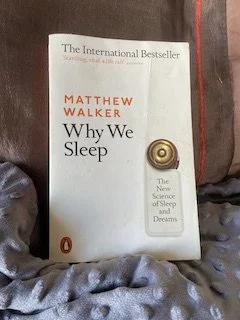
Matthew Walker is a Professor of Neuroscience at Berkely, and very much an expert on sleep. Incorporating the latest research, and using his own vast wealth of experience on the subject, you'll be as well informed on the topic as its possible to be. Even without my sleep struggles it’s a fascinating area, about which we are constantly learning.
“Practice does not make perfect. It is practice, followed by a night of sleep, that leads to perfection.”
It’s divided into four sections - About sleep; Why we Sleep; How and why we dream; and sleeping pills and society transformed. There are sections that are research heavy but I found Walker to be an engaging and informative writer.
This book is extremely readable, but as knowledgeable as I became about the subject of sleep, parts of it made me anxious in terms of thinking about the damages of sleep deprivation, especially at 4am in the morning when I felt exhausted and stressed. Statements like
"The shorter your sleep, the shorter your life span"
certainly did not make me feel any better. The author details how it can have a devastating impact on health, life expectancy, safety, productivity and education. I don’t think it will help much with the hyperarousal that is probably keeping you awake.
I think the author is keen to make a connection between lack of sleep and dementia/heart disease, but that is still at the early stages of being a proven link. It’s difficult to imagine a study where people are deliberately deprived of sleep for a long period of time to make it statistically accurate.
There is a short section on sleep hygiene, with some practical advice, including the importance of having a sleep schedule. Pardon the pun, but it certainly served as a wake up call in terms of my approach to insomnia, and there are no doubting the man’s credentials. But while it left me better informed, I’m not sure if I was sleeping any better as sleep hygiene is something I was already overly familiar with.
It’s one of the best books about sleep, but in fairness it’s not marked as a book to help with sleep. I'd still recommend reading 'why we sleep' but perhaps not during the wee hours if you are hoping to drop off again.
Amazon US Amazon UK Amazon AUS
The Sleep Book by Guy Meadows
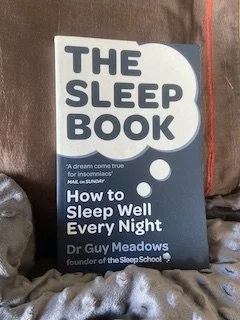
Dr Guy Meadows is a sleep physiologist with a doctorate from Imperial College London who has spent the past eight years helping people with sleep problems. He has worked one on one with many patients and what I liked about this book is that he uses a number of cases studies. It's hard to beat personal stories of people who overcame insomnia to boost your own motivation.
This was one of the first books on insomnia relief and sleep problems to introduce me to the importance of acceptance, and it's a recurring theme through many on this list. It also covers the related topic of mindfulness, but this is something I was already well aware of.
I liked this book, it's probably thin in terms of material and the message is a simple one in relation to acceptance, but harder than you'd think to apply. I read this book early on my sleep journey, and I can look back now and see that I should have paid more attention to some of the tips to beat insomnia but perhaps I wasn't ready for them.
I was probably reading it looking for a quick fix back then, although I found it useful and it contains tips that I continue with to this day. It’s certainly one of the best books on sleep training.
Amazon US Amazon UK Amazon AUS
End the Insomnia Struggle - A Step by Step Guide to Help you get to Sleep and stay Asleep by Colleen Ehrnstrom & Alisha L. Brosse
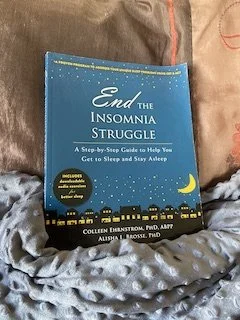
In all my time reading books for insomnia relief, this was when I took a granular, microscopic, stat based approach to my nocturnal activities. I had success with CBT in other areas of my life, so why not a book on insomnia, known as CBT-I.
I like stats, so for a while I was addicted to measuring my sleep; I was all in with this book, written by two psychologists. It felt like I was doing something (even when I was teaching myself not to do anything) and it suited my analytical mind.
This book won’t be for everyone, and in terms of it's approach of evidence based strategies it's not for the faint of heart - not everyone likes to be as rigid, and some of us prefer to stay under the covers. Sleep restriction therapy can be tough, no doubt, but there was a time when it suited me and I'm glad I tried it. It also goes into detail with acceptance and commitment therapy, which I found useful as my journey continued.
Amazon US Amazon UK Amazon AUS
Say Goodnight to Insomnia - a Drug Free Programme by Gregg D. Jacobs
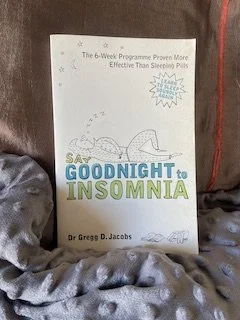
I read this book early on my journey, at the stage where I was reading anything with insomnia in the title. I was especially attracted to the ‘drug free’ - each time I approached my GP, I had sleeping tablets and melatonin prescribed. I tried them a few times, and invariably they didn’t work or made me feel horrible. I always felt that pharmaceuticals was never the way to go to treat my insomnia.
This book is an excellent overview of the various approaches to tackling insomnia, and you’ll be better informed about habits and foods that affect sleep, as well as relaxation techniques and changing your thoughts about sleep (acceptance again). You’ll be familiar with a lot of the information if you’ve had any previous interest in sleep hygiene - I don’t think there was anything I hadn’t read before, but perhaps in a bit more detail, and it’s good to have it all in one place. If you’ve ever had a question about sleep, you’ll probably find it answered here.
Where it excels is in the encouragement to keep a sleep diary to log your sleep, and working out a sleep schedule. This is done over 6 weeks, and you’ll be able to calculate a sleep efficiency rate, and see patterns and habits that affect your sleep. Overall, I’d say this is a solid book for sleep training, and a good one if you like a stat based approach.
Amazon US Amazon UK Amazon AUS
The Effortless Sleep Method by Sasha Stephens
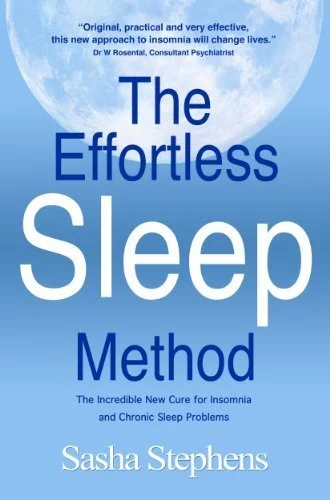
I think this was perhaps the first book where something ‘clicked’ for me. ‘Clicked’ as in I knew all the sleep hygiene rules, had read all the do’s and don’ts regarding sleep, and felt I was well informed about strategies for tackling insomnia. In fact, I began to sob internally whenever I read another article on sleep hygiene or someone asked ‘had I tried melatonin?’ I just wanted to make definite progress.
The first section of the book details the authors own insomnia story, as well as looking at standard approaches to insomnia. Next it looks at sleeping pills and sleep restriction therapy, and at the psychology behind how we create and maintain insomnia, which is very much at the heart of the approach to the book.
Next come 12 promises, which are step by step instructions that you commit to following as an insomnia sufferer. The first six of these cover sleep hygiene, and even though you might be familiar with the first six steps, by the time you get to this stage of the book, exhausted by insomnia, you’ll be eager to get started.
The second six promises tackle the negative beliefs we have regarding sleep. The ‘click’ for me was the realisation, enforced by this book, that my thoughts regarding sleep was at the source of my problem. Perhaps this won’t be the case for everyone, but it was for me.
Like a lot of the books about sleep on this list, there is plenty of repetition and I was familiar with the sleep hygiene rules (I feel I could write my own book on them at this stage) but ultimately I found this book to be incredibly helpful as I felt it was helping me begin to tackle the root of my insomnia. Progress at last!
Amazon US Amazon UK Amazon AUS
Awake: It’s Your turn by Angelo Di Lullo
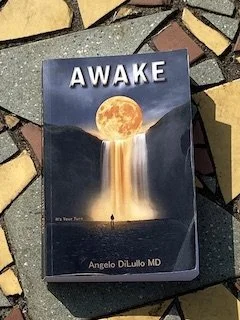
What’s this? Including a book about waking up in an article about falling asleep? I know, I know….stay with me here. I discovered this book during an early morning reading session, and it’s been a revelation to me ever since in terms of my thinking and emotions surrounding sleep.
I actually first came across the author whilst I was searching online at 3:14 am for another podcast about being awake at night. The algorithm threw this one up to me, and I was already hooked before I realised he was talking about something completely different. I have another list of books about non-duality, and I’d say it dovetails perfectly with my interest in sleep maintenance insomnia.
Of particular interest to me as I read ‘Awake’ were the chapters on thoughts, beliefs and emotions. I had certain thoughts about sleep, so I let them rise and looked at them. For example, I’d say to myself ‘Tomorrow is going to be horrible because I’m awake so early.’ But when I examined it later, I realised I was generally fine the next day. I was telling myself I was feeling horrible, but how do I really feel? Research in 2020 indicates we have anything up to 6000 thoughts a day - where do they come from? We don’t choose them.
Then came the chapter on emotions. When I woke early, I often felt anxiety and fear, and I’d stay with the feeling - as a sensation, where was it in the body? Did it stay in the same place, did it lower in intensity after a while? What else was there - were there any other feelings after anxiety left? I stopped ignoring my feelings, and practiced being with them. They were part of me and wanted to be heard and felt.
I had all of these belief structures around my sleep. I was addicted to sleep hygiene, and if I didn’t follow my rules around caffeine consumption/vitamins/nightly tea/room temperature/computer use/blue lights etc etc etc I would go to bed expecting to wake up. And I did - I was waking up at 2;30am because I was afraid of waking up at 2;30am. I looked at these belief structures, these sandcastles, and really examined them.
‘There is nothing either good or bad but thinking makes it so’ writes Shakespeare in Hamlet and I think this is something that we can apply to sleep. Instead of waking up in the middle of the night and staring at the curtains until dawn, why not embrace the night and use the free time?
It’s all about how you frame it. Observe your thoughts about sleep and watch them pass. More progress!
Amazon US Amazon UK Amazon AUS
Breath by James Nestor
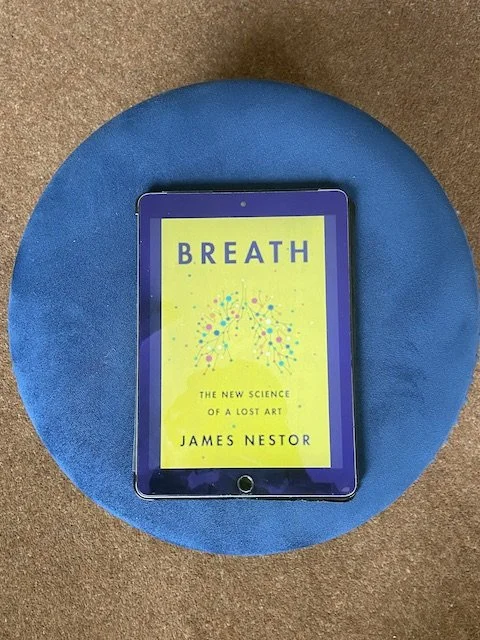
I’ve already reviewed ‘Breath’ by James Nestor on the blog and my reason for including it on this list is pretty simple - it helped me sleep better.
There’s a lot in the book about the dangers of shallow and mouth breathing, something I’m guilty of when sleeping. Well, guilty is the wrong word - I don’t do it deliberately. But it is a habit and a really difficult one to change.
He also goes into depth about breath holding and sleep apnea, which I don’t believe I suffer from but I’ve never been properly tested for it. And let’s not mention snoring or sleep talking (I’ve been a demon for that since I was a child).
Simply put, by learning how to breathe through our noses again, we can sleep better. As well as practicing some of the excellent breathing techniques at the back of the book (or the YouTube videos) you can also tape your mouth closed at night. Not with duct tape, but with small bits of surgical tape that won’t impede your breathing.
It’s a persuasive and informative book, and I’m still practicing the exercises and tips I learnt in this book. Give it a go, and see if you’re as surprised by the results as I was.
Amazon UK Amazon US Amazon AUS
‘Set it and forget it’ and ‘This is Natto’ by Daniel Erichsen
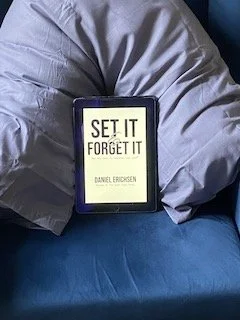
I discovered Daniel Erichsen and his approach when I disappeared down the reddit/insomnia rabbit hole at 3:33 am on yet another exhaustingly bleak early awakening. By morning I’d purchased ’Set it and Forget it’ and watched a couple of YouTube videos.
What I liked with Daniel was that I wasn’t just reading his books, but listening to his frequent podcasts and YouTube videos. I even asked a couple of questions during one of his Q & A sessions, and have emailed his team a couple of times. He runs a sleep program where you can link up with one of his coaches (I haven’t done this).
It was with these books that my approach to tackling insomnia completely changed. ’Set it and forget it’ was the first book I’ve read that encourages you to actively drop sleep hygiene - in fact, whereas before I quit coffee after midday, now I drank tea whenever I wanted. It’s part of moving to an effortless approach to sleeping, and lowering your hyperarousal. Daniel uses a really useful ‘gas and brake’ model that makes everything clear.
I found ’set it and forget it’ actually worked in tackling my early morning waking/Sleep maintenance insomnia, and it was a revelation to me how easy it was. I was done with sleep books, videos, podcasts - I was insomnia free for what felt like the first time in months.
But of course I fell into old habits again, or ‘speed bumps’ as Daniel calls them, and my insomnia returned. Everyone gets a bad nights sleep now and again, but I found myself spiralling after a few weeks. I tossed and turned for a number of nights before I remembered what had worked previously - so I went back to Daniel again.

This time I went with ’This is Natto’ which stands for ’Not attached to the outcome’. I could have re-read the previous book, but I thought I’d add this to my insomnia collection. I’d say the only difference between the two books is that Daniel really drills down into his approach. Insomnia is very much a ‘circular’ problem and this book looks at it from every angle.
I think both books on insomnia and sleep problems complement each other, and I’ve noticed improvements within a few days of reading each, but I have a way to go. These books are now my go-to’s, along with my meditation and self enquiry practice.
Set it and Forget it Amazon US Amazon UK Amazon AUS
This is Natto Amazon US Amazon UK Amazon AUS
What actually worked for me?
I found something useful in all of the previous books, but it’s Daniel Erichsens approach which has made the most difference to my insomnia, as ‘circular thoughts’ seem to be my particular problem.
It’s a fact of life that we have nights where we don’t sleep well, and I expect I’ll continue to have them. The question of how to fall asleep and stay asleep is one that I occasionally think too much about. Stress, anxiety and hyperarousal are going to reoccur - the trick is to not let them become an ongoing issue.
Simply put, I try not to worry about not sleeping. I don’t track my sleep. I don’t talk about my sleep to others. I want to treat my insomnia naturally, without medication. I accept that I won’t sleep soundly every night. If I don’t get a good nights sleep, I still make it through the next day. I don’t impulse buy the latest silver bullet cure because I’ve enough shoeboxes full of gunk.
I no longer scream when someone mentions sleep hygiene.
No lasting damage seems to have been caused by my early morning waking/Sleep maintenence insomnia, nor can I find any research that suggests it will be.
This may be my journey, but my sleep struggles are the same as everyone else’s. There’s nothing different about me. Like many people, I’ve only ever wanted to know how to fall asleep and stay asleep. Can I treat my insomnia without medication? I’ve always believed so.
If I had to sum it up in a sentence: I embrace wakefulness.
I am no longer just reading books for insomnia relief but they are close by. I've accepted that there will be nights of disrupted or poor sleep, and I still have a way to go, but there are also nights when I sleep just fine. I no longer track my sleep so I couldn't tell you how much I slept last night, and I don’t worry about sleep hygiene. It’s such a relief to be able to abandon all those different rules.
I’d advise being kind to yourself. Don’t beat yourself up about something you have no control over - you can’t make yourself sleep. If I awaken early, I do things I enjoy. Obviously reading is a passion, but I also love meditation, so I enjoy yoga nidras and guided meditations. It’s been a great opportunity for me to deepen my practice, to bring awareness to my body and thoughts and be with what’s there. Work with emotions such as fear and anxiety.
It’s also a good time to catch up on my favourite shows. There are times I just want to watch something funny or mindless, and that’s what I do. I no longer scour the internet for miracle cures - the only thing I don’t do is disappear down insomnia rabbit holes on reddit.
Very often, I just stay in bed. Being awake is not a threat. Reading, podcasts, audiobooks - all are fine.
I’m glad I read every book on this list. Sure, there are some of the books I wish I’d read earlier in my search for sound sleep, but I was always discovering something new about the subject. I think education is an important part of overcoming insomnia, and you have to learn about your own habits and build up your own understanding until you have these breakthrough ‘Aha’ moments where things click into place.
This has been a journey, and perhaps the most thing I've learnt is a word used throughout this article -acceptance. If you have problems with sleep, I hope you can find something in these books for sleep training that brings you towards that same understanding and acceptance that I have now found.
Any books about sleep or approaches to beat insomnia you think might be useful, let me know in the comments below.
And I wish you well. If you’re reading this and it’s 4am, and it feels like you’re engaged in an endless battle with sleep, I can tell you I’ve been there and it does get better. It’s the hyperarousal that’s most likely keeping you awake in an endless loop, but you have the tools now to break the cycle.
“Insomnia is caused by not being able to sleep well and is mostly caused by a fear of not being able to sleep well.”