

Books to Read Before Visiting Japan
When I travel, I always try to bring books connected to wherever I'm going — and if you're looking for books to read before visiting Japan, I'd say the right selection can genuinely change how you experience the country. When I went last year, I made sure I had some variety — something informative about life there, some fiction, and a couple that go a little deeper into the history and culture. Here are the titles I enjoyed, along with a few others I've read since that are well worth packing.
A Beginner's Guide to Japan by Pico Iyer
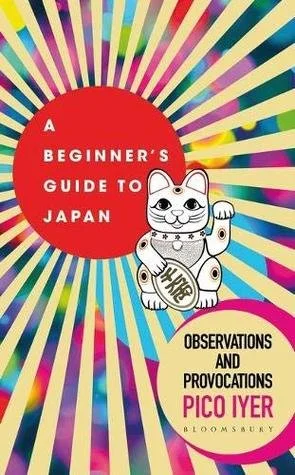
This was one of the first books I downloaded before my trip to Japan, and I ended up listening to it on futons in Kyoto Airbnbs in the pre-dawn quiet, too tired to sleep, too wired to read. It was the perfect companion.
Don't come to this expecting restaurant recommendations or neighbourhood guides — Pico Iyer isn't interested in any of that. What he offers instead is something rarer: a meditation on what Japan doesn't say. Silence, contradiction, ritual politeness, and the gap between surface and depth. Iyer has lived in Nara for decades and still doesn't claim to understand Japan, which is exactly why you should trust him.
The structure is non-linear — sumo wrestling, subway manners, temple etiquette, vending machines — a patchwork that mirrors Japan itself. For anyone interested in meditation or mindfulness, the Zen undercurrent will resonate deeply. It didn't help me understand Japan; it helped me experience it. Read or listen to this one first.
Abroad in Japan by Chris Broad
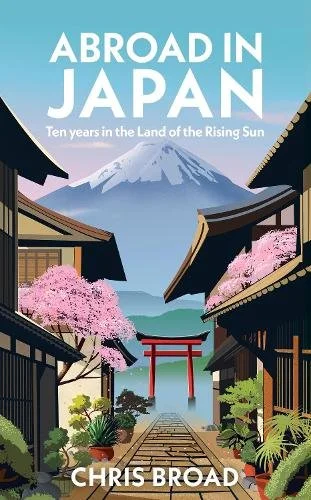
I bought this in a high street bookshop the day before I flew to Japan. The assistant noticed the title and asked if it might inspire me to plan a trip. I told her I was going tomorrow. It was only when I said it out loud that it hit me — I was actually going to Japan.
I inhaled the opening hundred pages on my first jet-lagged night in Osaka, my brain wanting all the information it could get. Broad writes about his years as a JET teacher in rural Yamagata — the loneliness, the culture shock, the slow warmth of making connections in a place that doesn't give them easily. It's breezy and funny but also genuinely informative about everyday Japanese life — izakayas, train etiquette, the unwritten rules of a society that really doesn't want you to stand out.
It's not the deepest dive into Japan you'll find on this list, but it might be the most fun. Perfect for an airport, a long flight, or a jet-lagged first night in a country that's just starting to make sense.
Norwegian Wood by Haruki Murakami
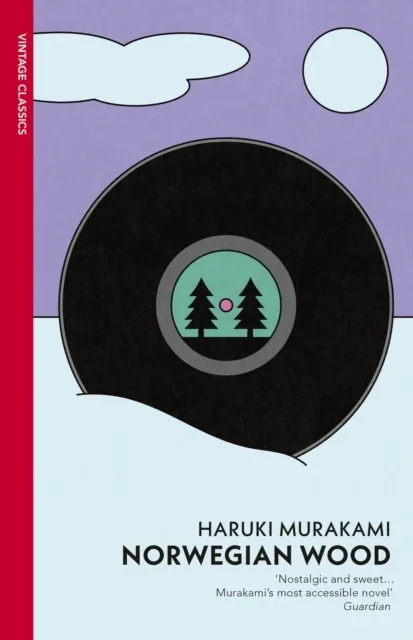
A word of advice — I took a Murakami hardback to Japan and regretted it on the way home, when my suitcase was already full of matcha Kit Kats, vinyl, gifts and souvenirs. But it’s worth getting the ebook or squeezing in a paperback copy of this.
Norwegian Wood is one of the bestselling novels in Japanese history, and if you're visiting Japan it makes perfect sense to read it before you go. The mood — melancholic, beautiful, slightly out of reach — mirrors something about the country itself. Real but dreamlike, familiar but just slipping away.
It's Murakami's most accessible novel — no magical realism, no talking cats, just a deeply human story about grief, love and the people we lose along the way. Toru Watanabe looks back on his student years in 1960s Tokyo, caught between two women who represent entirely different ways of being alive. Naoko is fragile and unreachable, haunted by loss. Midori is vivid and present, pulling him toward life.
I first read this in my twenties and recently returned to it. It hit differently — quieter, more melancholy, more true. If it gets under your skin, and it will, The Wind-Up Bird Chronicle is waiting after that.
Ghosts of the Tsunami by Richard Lloyd Parry
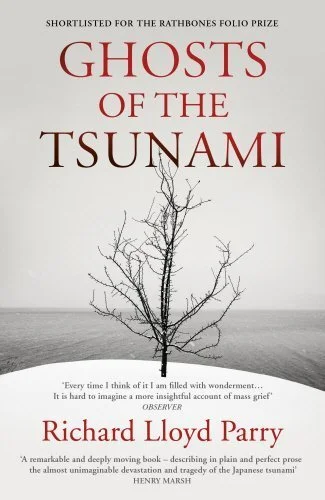
On the 11th of March 2011, the most powerful earthquake in Japanese history struck off the Pacific coast. The earth was knocked six and a half inches off its axis. Japan moved thirteen feet closer to America. The tsunami that followed killed 18,500 people, displaced half a million more, and triggered the worst nuclear disaster since Chernobyl.
Richard Lloyd Parry spent six years in the disaster zone reporting on what happened. Rather than attempting to capture the full scale of the catastrophe, he focuses on a single village — Kamaya — where 74 schoolchildren and 10 teachers died when administrators led them toward the tsunami instead of away from it. Only four of the 78 children survived.
What makes this book extraordinary is the individual stories. The grieving mother who taught herself to operate a bulldozer so she could keep searching the rubble for her daughter. The Buddhist priest performing exorcisms on survivors possessed by the spirits of the dead. A community bound together by grief, then slowly torn apart by recrimination and legal action.
Parry has lived in Japan for years and it shows — he earns the trust of people who don't give it easily, and writes with real understanding of a culture that processes grief quietly and inwardly. This is the book that opens that curtain.
Pachinko by Min Jin Lee
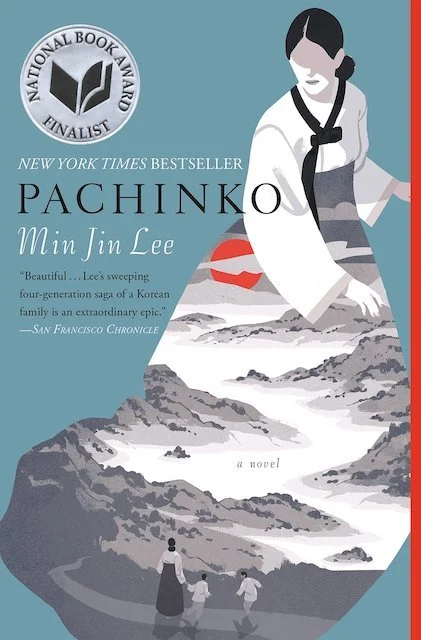
Before you visit Japan, it's worth understanding that not everyone in the country is Japanese. Pachinko tells the story of the Korean Japanese — a people born in Japan, raised in Japan, who can never become Japanese. Discriminated against, shut out of mainstream employment, scorned even when they return to Korea. A people caught permanently between two worlds.
The novel begins in 1911 when Korea is annexed by Japan, and follows four generations of one family through to Tokyo in 1989 — through the Japanese occupation, World War Two, Hiroshima and Nagasaki, the Korean War. History crashes around them but their focus never wavers from family, survival and dignity.
Pachinko — the Japanese pinball game played in vast, noisy parlours — gives the book its title and its metaphor. Korean men, shut out of legitimate work, turned to the pachinko business. The machines are subtly rigged so the house always wins. So, Lee suggests, is Japanese society for those born on the wrong side of it.
The Apple TV+ adaptation is worth watching too — they did justice to the epic sweep of it.
Butter by Asako Yuzuki
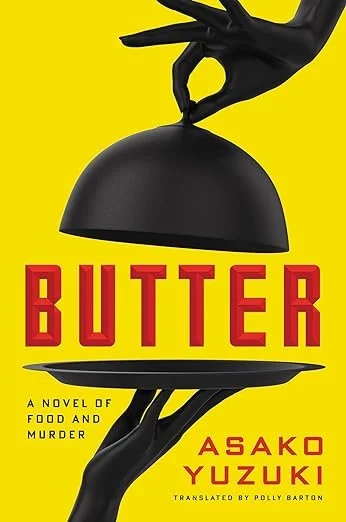
A woman sits in a Tokyo prison, accused of seducing and murdering wealthy men through the power of her home cooking. A journalist begins visiting her, ostensibly to investigate. What follows is one of the most quietly unsettling novels I've read in years.
Butter is part crime novel, part literary thriller, part feminist social commentary — and entirely Japanese in its restraint and precision. The writing is understated and slow-burning, the dialogue full of subtext, the truth always just out of sight. It has more in common with Convenience Store Woman than with any crime novel you've read — both are about women who refuse to conform to what Japanese society expects of them, and the discomfort that causes everyone around them.
The food writing is extraordinary. Rich, sensory, almost visceral — descriptions of buttered rice and home-cooked meals that had me questioning my own dietary choices. But food here is never just food. It's power, resistance, nourishment and manipulation all at once.
Waterstones Book of the Year 2024, and deserving of it. Read it before you go — it will give you a different lens on modern Tokyo.
Convenience Store Woman by Sayaka Murata
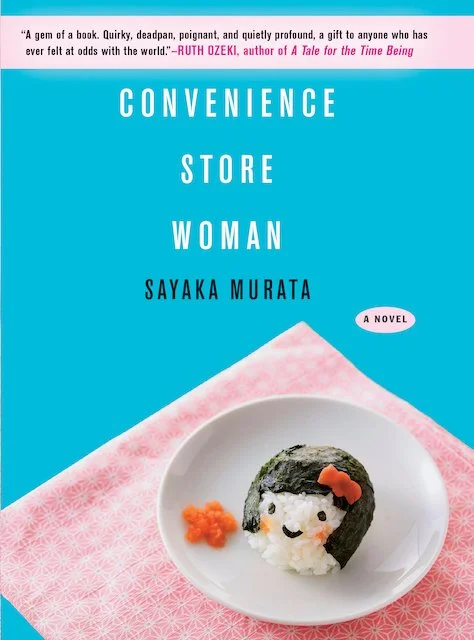
My first experience of a konbini was in Osaka, where the staff at the Lawson's on my hotel ground floor all shouted Irasshaimase! as I walked in. Not knowing the correct response — there isn't one — I shouted back a cheery Konnichiwa! They looked at me like I was slightly mad.
Keiko Furukura has worked in a Tokyo konbini for half her life and she couldn't be happier. The routines, the rules, the rhythms — at the store, she feels normal. Outside it, she's a problem. Thirty-six, unmarried, no career ambitions. Japanese society has no place for someone like her.
This short, quietly devastating novel is a social critique disguised as something almost comedic. The prose is minimalist and clean, perfectly suited to a character who processes the world through logic rather than feeling. Keiko is never an object of pity — she knows exactly who she is, which is more than most people can say.
Read this before you visit Japan and you'll notice things differently — the harmony, the unwritten rules, the social pressure humming beneath the surface of everything. The nail that sticks out gets hammered down, as the Japanese say. Keiko refuses to be hammered.
Alone in Japan by Tom Feiling
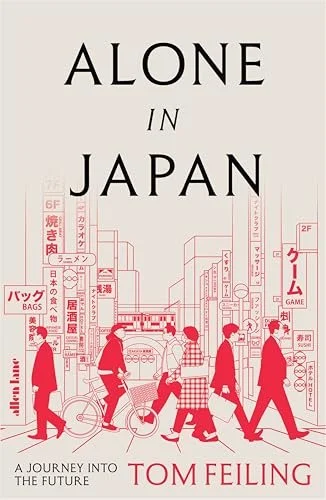
During my visit to Japan I noticed older people everywhere still working — in the konbinis late at night, directing traffic in Kyoto. It sent me down a rabbit hole, and eventually to Alone in Japan by Tom Feiling, a compelling look at a country facing a demographic crisis unlike anything the world has seen before.
As dramatic as it sounds, Japan is shrinking. By 2060, the population is expected to have declined by around 40 million — roughly a third of what it is today.
Feiling goes on a tour across the country, meeting with people and investigating the factors behind Japan's population decline: the erosion of traditional family structures, rural decline, changing attitudes to having children, the importance of careers for women, and people opting for single lives.
I particularly enjoyed the tangents — the importance people place on pets (including funeral rites), the rise of robots to combat loneliness and assist with domestic care for the elderly, and the deeply sad stories of people who die alone and villages that are quietly disappearing.
It does contain a lot of stats, and some may find the subject matter a bit dry, but as someone interested in the drastic change in social demographics that the company is facing, I found it fascinating.
Sayonara — For Now
So there you have it — some of the best books to read before visiting Japan. I've tried to include a real variety; fiction, history, cultural insight and travel memoir, all of which added something to my experience of the country. If you're planning your first trip, I hope these give you as much pleasure as they gave me. If you're similar to me, you'll come back already planning your next visit — and with a much longer reading list.
Mata ne — see you again.