

Lonesome Dove by Larry McMurtry
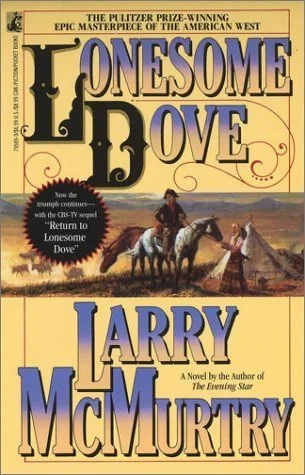
Lonesome Dove is an epic novel about two retired Texas Rangers, Woodrow Call and Gus McCrae, who set out on a gruelling cattle drive from the Rio Grande to Montana. Along the way, they face brutal hardships, haunting memories, and the slow erosion of the world they once knew. It's a story of loyalty, loss, and the unglamorous grit of the American West.
Epic Western
Back in November I decided I want a long novel to sink into. I was dipping in and out of fiction, only half submerging myself. I had some sort of a notion that I wanted to lose myself in something epic, a world and stories that would sweep me away. I seem to have misplaced my reading mojo recently, more so for fiction, and it seemed as good as idea as any.
I really couldn’t have chosen better. At nearly 900 pages long, it took me the the best part of two months to make my way through this. It was the immersive work I needed to keep me reading. Who would have thought it would take an epic western to reignite the reading bug?
Woodrow Call and Gus McCrae
There’s a large cast of characters but it’s Call and McCrae whom we follow from start to finish, and who give the book a lot of it’s action and emotional heft. These two are former texas rangers now turned cattlemen, who we first meet in Lonesome Dove, a dusty, half-forgotten town on the Texas-Mexico line.
The two are in a sort of semi-retirement with their hat creek cattle company, Gus more interested in his jug of whiskey and his visits to the local dry bean saloon to enjoy the company of Lorie, a young prostitute. Gus is very much the soul of the book - very witty, stubborn but with a secret heartbreak. It’s a while since I found myself laughing at a book but it was almost always one of McCrae’s one liners or philosophical musings.
Woodrow Call on the other hand is very much his opposite - stoic and disciplined, rarely emotional and driven by a sense of responsibility. He’s the sort of old school Gary Cooper cowboy, very repressed and independent.
But these two are bound to each other by decades of trail life, war, women and friendship. Without each other, they’d probably not survive. It’s a beautiful, complicated relationship that is at the heart of the book.
Montana
The story really begins when an old comrade shows up with tales of rich, untouched land in Montana. That sparks a bold, fairly insane, cattle drive north — a journey filled with hardship, death, reunion, and reckonings. The novel becomes a sweeping, elegiac portrait of the dying West more than just a dying town, and it’s where the book becomes an epic.
The beginning of the book lulled me into a false sense of security - obviously we couldn’t lounge around with Gus and his pet pigs in Lonesome Dove for nearly 900 pages, but I couldn’t have foreseen what lay in the store when Woodrow Call determined that there was one last big journey in them. And a large part of Call’s desire to move is because of his inability to confront his deeper questions of life purpose and identity.
It’s been a while since I’ve watched a Western, but I can remember those that tend to romanticise it. This is a trip that features blood, loss and lots of sudden, brutal violence. Part of it shocked me, and it won’t be for the faint of heart at times.
Most of the Indians have been murdered or driven off the land, and buffalo have become a rare sight.
Characters
There are so many vivid characters throughout this. Deets was a favourite of mine, the only black character who was loyal and had a quiet dignity about him. A bit of my heart stayed with Lorena, and there was something incredibly tender in her relationship with Gus. Ah and little Newt, having to grow up fast, and the plodding deputy Roscoe. Oh, how could I forget Clara - easily a match for McCrae.
Honestly, too many to mention.
Writing
This is a masterpiece in storytelling. There is the plot of driving the cattle to Montana and all that entails. But there are also a number of subplots that run throughout, some eventually combining to reach an explosive climax. Life could be short and brutish in this land.
But it’s also driven as much by character - these feel like real nuanced people, sometimes doing the right thing, sometimes wrong. But always human, and my heart often broke for them. With Blue duck he also created a proper villain, though who is good and who is bad is complicated.
McMurty writes dialogue that rings so true, and oh to spend an hour in the company of Gus McCrae to listen to his philosophical ramblings. Some of the writing itself seems deceptively simple, it’s so easily read, but it often feels profound.
And some of the set pieces are completely enthralling, some built slowly whilst others come leaping off the page from nowhere.
Summary
I would say that you have to give the book a hundred pages before it gets going. It might seem like nothing is happening but before you know it you’ll be right in the mix. Glad I stayed with it.
You can think of a typical Western with cattle drives, Indian raids, stoic cowboys and all the usual but it doesn’t come close to capturing the heart and soul of this book, which is so much more than that. It also certainly does not romanticise this period of American History.
This is truly an epic, with some intense action sequences, violence, heartbreak and loss. But it’s the vivid characters that I’ll remember most. Sure fixed my reading mojo.