

Haruki Murakami: Where to Begin and What to Read Next

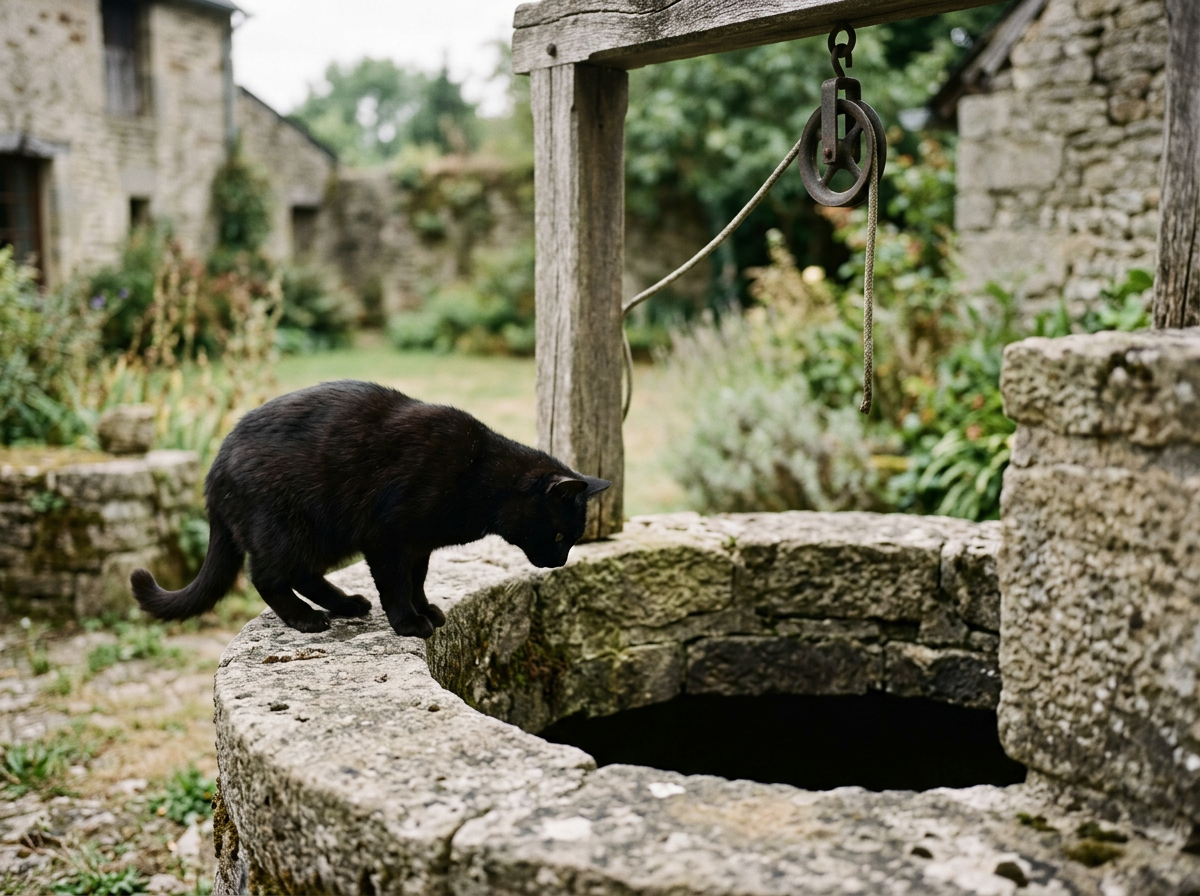
Haruki Murakami once described human existence as a two-storey house. The ground floor is where we gather and socialise; the floor above is where we retreat into ourselves. Below that is a basement — somewhere we wander occasionally. And below that basement is another room entirely, with a door that's difficult to find, that some people never open at all. You go in, move through the darkness, connect with something deep in your own past. But you have to come back. Stay too long and you lose your way back to the surface.
It's the best description I've encountered of what reading Murakami actually feels like, and it's why re-reading him is so rewarding. The first time through, you're finding the door. The second time, you already know where it leads — and that changes everything. You stop trying to decode the surface and start paying attention to what's underneath it. That's where Murakami really lives.
You also get to fall under the spell of his wonderful writing. It’s amazing how deceptively simple his prose is doing the heaviest lifting. He can write a man making pasta or ironing a shirt with the same unhurried attention he gives to a walled city or a talking cat, and somehow the mundane moment ends up carrying just as much weight.
He never rushes an image, never over-explains a strange one, and trusts the reader to sit in ambiguity without needing it resolved. That patience — in the sentences themselves and in what he's willing to leave unsaid — is the real skill, and it's why his stranger ideas land instead of feeling like gimmicks.
Ok let’s get started.
Murakami Books in Order
His novels don't follow a strict order, so I’m going to group them slightly differently. I’m going to start with the books I believe a new Murakami reader should start. After that, I’ll be grouping them by theme, very much my own based on my own thoughts. So if you liked one title, and you are wondering which Murakami to read next, that might give you some idea.
There are a few I haven’t read yet, so I’ll include them as I go. But the majority will see me revisiting Murakami’s strange, immersive worlds, that are just as rewarding second time around.
Best Murakami Books to Start With?
Every Murakami reader will have their own idea about where to direct new readers and I am no different. For me there are three books which work as the perfect introduction to his world.
I could have put these in any order, but as I started with TWUBC because it’s where I began. Jump into the well and see how you go.
Haruki Murakami The Wind Up Bird Chronicle
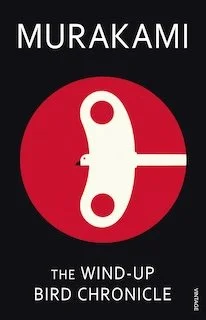
This is where I started over twenty years ago and for me it’s a complete introduction to Murakami. It contains surrealism, characters with depth, and moments from Japanese’s involvement in WW2 - for me some of the most visceral scenes in the book. And hey, it’s even got cats in there too (no jazz though).
I’d forgotten a lot of this book, but there was scene that I remembered as soon as the narrative went in a certain direction. A reminder that there are moments of horror in Murakami’s work that sometimes come out of nowhere.
For me a lot of this book explores pain, buried pain (trauma) and how it filters through the generations, and literal descent into emotional pain (the well). It’s also the most political of his books.
I’m going to say that if you are new to Murakami, I probably wouldn’t start here. For first time readers, parts of it may seem strange and somewhat impenetrable. I’d go with with either ‘Kafka’ or ‘Norwegian’ first, but I’d certainly make it one of his early books to read.
(If you enjoyed the The Wind-Up Bird Chronicle, you might also like 1Q84)
Haruki Murakami Norwegian Wood
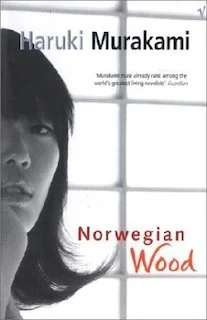
There was also a twenty year gap between my first and second reading of this book, so I was reading it from two very different places in my life, which meant it hit differently. It’s a story of a man looking back at his youth, and particularly his relationship with two very different women.
Where Naoko pulls Toru back into memory and loss, Midori is pure present tense — funny, blunt, alive in a way that has nothing to do with grief. That contrast is really the engine of the book: Toru caught between someone who represents the past he can't let go of and someone who's asking him to actually live. Reading it again all these years later, I found myself paying far more attention to Midori than I did the first time round, which says something about which of those pulls felt more urgent to me at nineteen versus now.
It’s another good one to start with, as it’s more straightforward than some of his other works, and contains no magic realism. There is though a sense of dislocation between two worlds, especially with the character of Naoko, a tragic figure in the book.
There’s a haunting quality to this book, a bit like the song, that lingers with me. It’s an accessible book, a deeply human story about grief, love and the people we lose along the way.
(If you liked Norwegian Wood you’ll probably enjoy South of the Border, West of the Sun, featured in the quiet interior list found later).
Haruki Murakami Kafka on the Shore
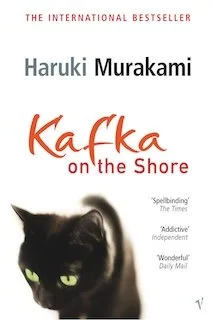
‘Kafka on the Shore’ features two worlds - in one you have fifteen year-old runaway Kafka, whilst the other features the elderly Nakata - a veteran with the ability to talk to cats.
Although this book contains lots of surrealism, there is also a linear plot (of sorts) with two protagonists, so it is easy to follow, despite its strangeness (talking cats).
Coming of age, loneliness, fate versus free will - the themes are all relatable here. It will also introduce you to some of the recurring motifs of Murakami’s work - cats, wells, jazz and classical music.
Personally, this is one of my favourite Murakami novels, as it combines that dreamlike surrealism we associate with his work along with the emotional pull of his coming-of-age stories, and the balance is perfect. Ripe for another re-read I think.
(If you enjoyed Kafka on the Shore, you might enjoy Hard-Boiled Wonderland and the End of the World)
Parallel Worlds
My next grouping is going to be parallel worlds - these are the books where Murakami stops hinting at another world underneath ours and just opens the door. Two moons in the sky, a town cut off from the rest of Japan by a wall only some people can see, a mind split between a coded "System" and a walled-off world where unicorn skulls hold people's severed memories.
The logic of these books isn't dream logic exactly - it's closer to how memory actually works. Things connect that shouldn't, and cause and effect loosen their grip. If the ‘Best books to start with’ ease you into that strangeness, these three commit to it fully.
Haruki Murakami The City and its Uncertain Walls
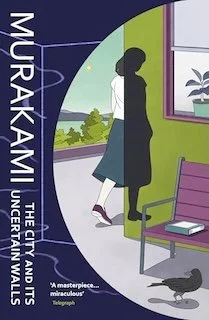
Reading Murakami’s novels over the decades has been a big reason for my interest in Japan, so on a recent trip to that country I squeezed this into my luggage. Although I did enjoy lying in a hammock in a hotel in the hot spring resort town of Gora reading this, honestly I wish I’d left more space for goodies such as Matcha chocolate and cheap vinyl to bring back again and went for an e-book version.
‘The City and its Uncertain Walls’ is a quiet, melancholic return to themes that have defined his most haunting work — memory, loneliness, and the blurred line between inner and outer worlds.
Based on a story he first wrote as a young novelist and couldn't let go of, this is about a teenage boy who falls for a girl who tells him her true self lives in a walled town beyond his reach; she vanishes, and he spends the rest of his life trying to find his way back to her, on both sides of the wall.
For me this was a slow burner, a mature and reflective work from a writer now in his seventies, looking back at where some of his obsessions started.
Haruki Murakami 1Q84
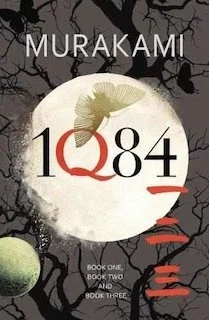
Early warning on this one - the hardback is a mammoth 944 pages long. On its release this became my choice for my daily commute - e-book, not the physical copy. Only an hour’s travelling each day but I got a good month out of it.
1Q84 is Murakami's title playing off Orwell's 1984 — in Japanese, "9" and "Q" are pronounced the same way — and it's fitting, because this is his most sustained alternate-history novel. Two narrators, Aomame and Tengo, drift into a version of 1984 Tokyo that's almost identical to the real one except for a second moon hanging in the sky and a shadowy religious cult called Sakigake with something otherworldly moving through it. Their stories run in parallel for most of the book's considerable length before they finally, inevitably, converge.
It's the closest Murakami comes to genre fiction — part thriller, part love story, part conspiracy — while still being unmistakably his. The pace is slower than Kafka or Wind-Up Bird, and at three volumes it asks more patience than most of his other work, but it rewards readers who want to properly live inside one of his invented worlds rather than just visit it.
It’s one that divides constant readers of Murakami - personally, like the previous title, I enjoyed the meditative slow pace. Is it too long? Maybe a tad, but I for one am happy for Mr Murakami to write as much as he wants. Is the plot resolved and atmosphere sustained through book 3? You can’t please everyone.
You can probably tell by now that I’m just happy to spend time in Murakami’s worlds, and with a book over 900 pages long, this is as immersive as it gets. It gives me lots of time to get lost in his prose, the meditative rhythm of his writing.
Haruki Murakami Hard-Boiled Wonderland and the End of the World
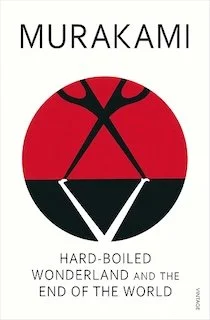
Hard-Boiled Wonderland and the End of the World runs two novels in alternating chapters, each with its own tone, its own logic, its own version of reality — and Murakami makes you wait to find out how they fit together.
One half is a sharp, paranoid, technological story about a man whose own mind has become valuable enough that other people want to steal what's inside it. The other is slow, hushed, almost like a fairy-tale: a man settling into an unnervingly calm life in a town that asks him to give something up in exchange for peace. Murakami lets both stories build in isolation before showing you why they belong together, and the disorientation of reading them side by side is entirely the point.
It's also the earliest full version of an idea Murakami would return to decades later in The City and Its Uncertain Walls — so if something about the atmosphere here feels familiar once you've read both, that's not you imagining it.
Killing Commendatore
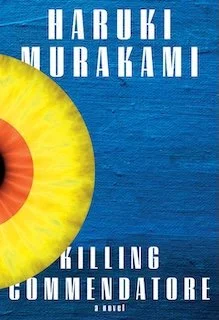
I honestly didn’t know where to place this one, and have opted for the ‘parallel worlds’ category, but it honestly could have been placed elsewhere. The protagonist has a number of parallels with the narrator from ‘Wind up Bird’ (wife leaves, and he spends a lot of time in a stone pit as opposed to a well). But there’s also a journey that starts with a bell ringing underground, and takes in a descent into the underworld, via Nazi era Vienna and a hidden painting in an attic.
There is a sense here of a creator looking back at the art he’s spent decades creating, and it’s definitely an interesting book considered from that perspective. This is a slow book, and I’ll let you decide yourself whether it’s as satisfying as some of his earlier classic works.
The Rat Trilogy (+1)
My next grouping is known as ‘The Rat Trilogy (+1) because it covers the first three releases - Hear the Wind Sing, Pinball, 1973 and A Wild Sheep Chase. These books were released well before Murakami became known outside his home country, four novels following an unnamed narrator and his enigmatic friend, "The Rat," through bars, dead-end towns, and increasingly strange detours. Dance Dance Dance isn't officially part of the trilogy but is usually treated as an unofficial fourth entry, since it follows the same unnamed narrator years later.
I suppose you could say this is just before Murakami fully finds his voice, but you can see some familiar patterns beginning to emerge - something strange just beneath the surface, slightly melancholic, deadpan with some jazzy inflections. Though I’ve posted them in order of release, personally I don’t think they need to be read in chronological order; maybe other Murakami fans think differently.
Haruki Murakami Hear the Wind Sing
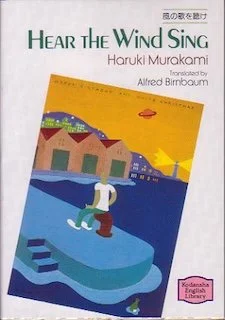
Hear the Wind Sing was written before Murakami thought of himself as a novelist at all. He was running a jazz bar in his late twenties, and by his own account the idea arrived out of nowhere watching a baseball game — he went home and started writing at the kitchen table after closing each night. The result, published in 1979, won the Gunzo Prize for new writers and set his career in motion, though he later disowned it somewhat, calling it thin and unpolished compared to what came after.
It's a slim book at 130 pages (If you’re purchasing, do yourself a favour and buy the volume that contains both this and pinball - I’ve added it to the affiliate link below) — an eighteen-day stretch of one summer, told in short numbered sections, following a nameless narrator drifting between a bar, half-formed conversations, and his oddball friend Rat. Almost nothing happens, and that's the point: this is Murakami working out his voice in real time, years before the wells, the cats, and the parallel worlds all mentioned previously. But you can see this is where his obsessions started, before he knew how to build a plot around them.
Haruki Murakami Pinball 1973
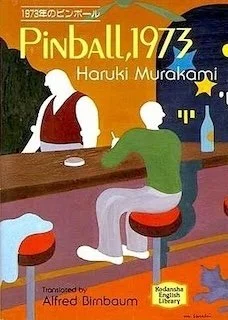
Pinball, 1973 picks up not long after Hear the Wind Sing, following the same unnamed narrator as he drifts through a quiet, aimless stretch of life in Tokyo — running a small translation business with a friend, living with a pair of identical twins who appear and vanish from the narrative without explanation, and becoming fixated, almost obsessively, on tracking down a specific pinball machine he used to play years before.
I suppose it sounds slight described like that, and in some ways it is — Murakami himself has been famously unenthusiastic about his own early work, and this is the one he's been most dismissive of. But the tone is already unmistakably his: melancholic, understated, full of loss that's never named directly, threaded through with small absurdities that never tip into full surrealism the way his later work does.
If you're working through the Rat Trilogy in order, it's a slighter, quieter bridge between Hear the Wind Sing and the much more confident, structured A Wild Sheep Chase — worth reading for completeness and to watch his voice taking shape, but I wouldn’t say it’s the place to start if you're new to him.
(Like above, I’m including the link to purchase both books together)
Haruki Murakami A Wild Sheep Chase
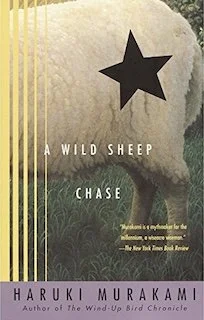
A Wild Sheep Chase is where Murakami's early work really snaps into focus. The same unnamed narrator from the first two books is pulled into something far stranger and more consequential than translation work and pinball machines: a bizarre, menacing organisation wants him to track down a specific sheep with a star-shaped birthmark, one that's apparently possessed a string of powerful men throughout Japan's history, including his enigmatic old friend, the Rat. What starts as a favour spirals into a genuine quest — remote Hokkaido farmhouses, a man in a sheep costume, a chauffeur who barely speaks, and an atmosphere that tips from deadpan comedy into something closer to dread.
For me it's the first of his novels that feels fully formed rather than a promising sketch — plotted with real intent, funnier than anything in the first two books, and carrying a much stronger undercurrent of political and historical weight (Japan's wartime and postwar past sits just beneath the surface, the way it does in so much of his later work).
Given how much stronger it is than what precedes it, it's arguably the more natural entry point into this cluster for a reader who wants a genuine Murakami experience without the caveats that come with Hear the Wind Sing and Pinball, 1973.
(If you enjoyed A Wild Sheep Chase, you might also enjoy the next book on this list - Dance Dance Dance.)
Haruki Murakami Dance Dance Dance
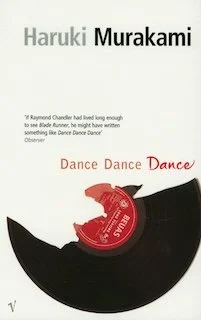
Dance Dance Dance is technically the sequel to A Wild Sheep Chase, picking up the same unnamed narrator years later, drawn back into the world of the Dolphin Hotel — the shabby place from the earlier book, now transformed into a slick high-rise, and haunted by the ghost of the friend he lost there.
What begins as a nostalgic pull back toward his past becomes something considerably darker: a string of unexplained disappearances and deaths circle around him as he moves through Sapporo, Tokyo, and Honolulu, trailed by a psychic teenage girl, a one-armed poet, a coolly self-possessed film star, and a figure who exists somewhere between dream and reality, guiding him through a kind of underworld.
It's the most emotionally substantial of the four — grief runs through the whole book, for the Rat, for a version of Japan and of the narrator's own youth that's been paved over by 1980s consumerism and capitalism. It's also stranger and more violent than anything preceding it, closer in tone to the parallel-world unease of his later novels I’ve described above than to the shaggy, episodic feel of Hear the Wind Sing or Pinball, 1973.
If A Wild Sheep Chase is where the trilogy earns its reputation, Dance Dance Dance is where Murakami's mature voice properly arrives — for me you can draw a straight line from this book to The Wind-Up Bird Chronicle.
The Quiet, Interior Novels
Not every Murakami novel needs a parallel world or a talking cat to leave a mark. This group is quieter, more grounded — stories of loss, memory, and relationships that could almost pass for realist fiction, if it weren't for the melancholy running underneath that only he seems to write quite this way. If the surreal side of his work isn't what draws you in, or you just want to see the more restrained version of his voice, start here.
Haruki Murakami South of the Border, West of the Sun
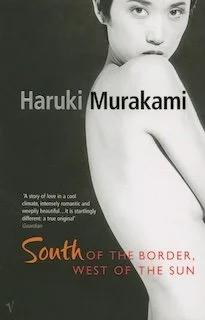
South of the Border, West of the Sun follows Hajime, a man who's built a comfortable, ordinary life — a wife, two daughters, a couple of successful jazz bars — when a woman from his childhood, Shimamoto, walks back into it. She was his closest friend at twelve, and her sudden reappearance as an adult unsettles everything he thought he'd settled into. What follows is less about plot than about the pull of a first attachment that never resolved — the way an old, unfinished feeling can sit dormant for decades and then surface with disproportionate force.
It's one of Murakami's shortest and most straightforwardly told novels, with none of the surrealism that marks so much of his other work — no wells, no alternate worlds, nothing you'd need to suspend disbelief for. What it shares with his stranger books instead is the atmosphere: a particular kind of ache, desire that isn't fully explicable even to the person feeling it, and a sense that the past is never as finished as we'd like to believe. If Norwegian Wood is his best-known "realist" novel, this is its quieter, more adult cousin — smaller in scope, but just as unflinching about longing and regret.
Haruki Murakami Sputnik Sweetheart
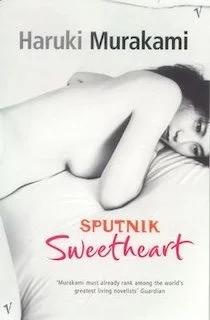
Sputnik Sweetheart centres on K, a quiet, steady schoolteacher hopelessly in love with his friend Sumire, an aspiring novelist who is in turn falling for an older, enigmatic woman named Miu. It's a story built on lopsided desire — nobody in this triangle wants the person who wants them — and Murakami uses it to explore isolation, longing, and the particular loneliness of loving someone you can never quite reach. The title comes from Sumire's fascination with Kerouac's "beatniks," which Miu accidentally mishears as "Sputniks" — a small, telling detail about the gap between what we mean and what actually gets received.
Midway through, the novel takes a genuinely strange turn, and the book tips from character study into something closer to his more surreal work — questions of identity, doubling, and what happens to a self that becomes cut off from the people who define it. It's shorter and stranger than South of the Border, but shares its interest in solitude and the impossibility of ever fully knowing another person. A good pick if you want a taste of Murakami's stranger instincts without committing to something as long or as dense as his major novels.
Haruki Murakami Colorless Tsukuru Tazaki and His Years of Pilgrimage
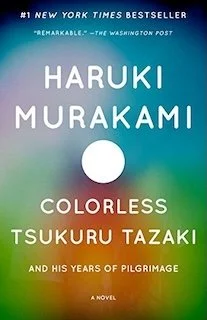
At sixteen, Tsukuru Tazaki was one of five inseparable friends — until, with no explanation, the other four cut him off completely, all at once, and never told him why. Sixteen years later, still quietly shaped by that unhealed wound, he's encouraged by a new partner to finally track down his old friends and ask the question he's spent his adult life avoiding. What follows is less a mystery than a reckoning — Tsukuru revisiting each friend in turn, piecing together what actually happened and what it did to him in the years since, even as some answers remain frustratingly, deliberately out of reach.
It's one of Murakami's most emotionally direct novels — grief, rejection, and the particular damage of being excluded without cause, examined with real patience rather than deflected into surrealism. There are still faint traces of his stranger instincts (dreams that blur into reality, questions about identity and colour that Murakami never fully resolves), but this is fundamentally a book about friendship, self-worth, and the specific kind of loneliness that comes from not knowing why you were left behind. If Sputnik Sweetheart is about desire that can't be reciprocated, this is about belonging that was taken away without warning — arguably the most quietly devastating book in this cluster.
Haruki Murakami After Dark
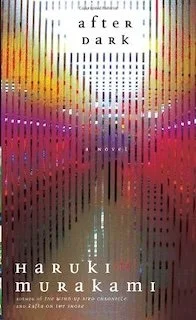
After Dark unfolds over a single night in Tokyo, following Mari, a young woman who's chosen to stay out until dawn rather than go home, and the strangers whose lives briefly intersect with hers — a trombonist, the staff and residents of a love hotel, and, running quietly alongside it all, her older sister Eri, who's been asleep, almost unnaturally so, for months. The narrative drifts between these threads with an unusual, almost cinematic detachment — Murakami frequently writes as if the reader is a camera moving through the city, watching rather than inhabiting, which gives the whole novel a hushed, suspended quality that matches its overnight setting.
It's his shortest novel and one of his more experimental in form, less interested in plot than in atmosphere and the strange, liminal texture of a city between midnight and sunrise. The uncanny elements are there — Eri's sleep in particular edges toward something unexplainable — but they stay understated, more mood than mystery. If you want the quiet, interior register of this cluster distilled into something you could read in an evening, this is the one.
Short Story Collections
Short story collections work well as an entry point to Murakami’s works without the commitment to one of his detailed, lush novels as previously mentioned above. For me it works well as a collection you can dip in and out of on your commute or you just fancy some bite sized Murakami.
Haruki Murakami The Elephant Vanishes
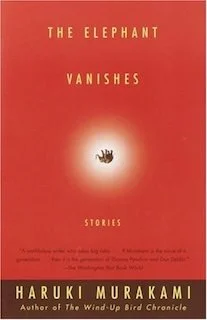
This collection was published all the way back in 1993, and contains seventeen short stories. Amongst them include, as the title suggests, an elephant vanishing into thin air, characters who have to eat 30 burgers from McDonalds, a woman who hasn’t slept for seventeen days and reads Tolstoy. That’s just a flavour.
This is a varied collection, and as with many Murakami works you’ll wonder where imagination ends and reality begins. Some of them are unsettling, with mundane lives interrupted by something fantastical.
Haruki Murakami After the Quake
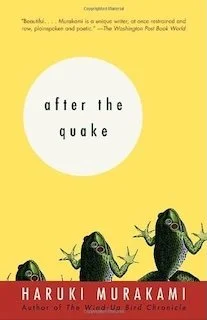
The six short stories in this collection were composed, as the title suggests, after the Great Hanshin or Kobe earthquake of 1995 which claimed 6,500 lives. Although the characters aren’t directly affected by the disaster, they are impacted by the aftershocks from it. In one a man’s wife leaves him just as the earthquake dominates the news, and he becomes oddly fixated on the disaster despite having no direct connection to it. The wonderfully titled ‘Super-Frog Saves Tokyo’ sees a mild-mannered bank employee recruited by a giant frog to help stop a subterranean worm from causing a second earthquake in Tokyo.
Again, we touch on one of Murakami’s favourite themes - trauma resurfacing in peoples lives in all sorts of strange ways. The quake acts as a sort of trigger, exposing cracks that already existed, this time in the national Japanese psyche.
Haruki Murakami Blind Willow, Sleeping Woman
Good value for money here, with twenty four stories in this collection that dates back to 2006. Not only is Japan featured here, but Europe as well, in a set of stories that stretch from the mundane to the surreal, as we have by now come to expect from Murakami. I think with that many stories it’s going to be a bit uneven, and some are stronger than others. But there are enough in here to justify the admission fee and like buses, if there’s one you’re not fussed on, there’ll be another along shortly.
Haruki Murakami Men Without Women
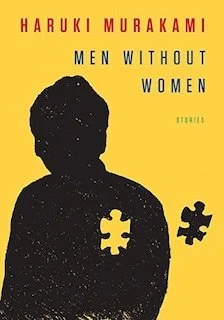
Seven stories here from 2014. I’ve only recently realised that an Oscar-winning film from the director Hamaguchi that I enjoyed last year, ‘Drive My Car’ is based on a story from this collection. I think it’s overly simplistic to describe this as a themed group of stories based around men and their feelings of alienation from love, usually after a breakup. There’s something melancholic and understated here, and it’s multilayered.
I think it’s more emotionally straightforward than some of his other works, though you still have the usual cats that disappear, baseball and The Beatles, smoky bars and of course an insect who turns into a human.
Haruki Murakami First Person Singular
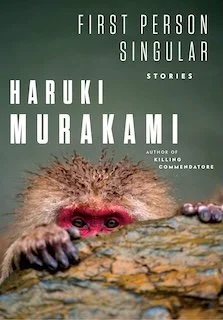
A fairly recent collection here of eight stories from 2020, at the time of writing his most recent. I think it contains a nice blend, and like the title states, it’s told from the perspective of the first person. One difference here is that lines between autobiographical and fiction blur here - metafiction I think it’s called - and in the story A Shinagawa Monkey you have Murakami having beers with a monkey whilst discussing existential matters. Jazz and baseball, two of his favourite interests, also feature in this book.
I’m going to say that this is a better collection for the established Murakami fan, whilst if you’re looking for an entry point into his short story work, The Elephant Vanishes is where I’d start. That’s not to say there isn’t a lot to admire here.
Non Fiction
As well as his fiction, Murakami has written a number of works of non-fiction that encompass subjects as diverse as running, music, a terrorist attack and his own craft.
Haruki Murakami What I Talk About When I Talk About Running
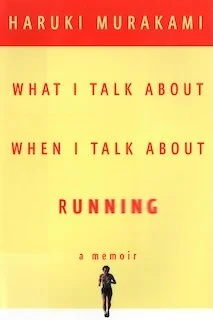
I took a notion to start running about seven years ago, getting up early and plodding the pathways of my local town. It was a way of losing a few pounds and just improving my own overall aerobic fitness, and I loved the discipline of doing it every day and found it to be great for my mental health. I was never doing any great speed, but was happy to run 5K before I went to work.
Due to a recurring knee problem, as well as constant small injuries, I had to give it up a couple of years ago, and I still miss it. Sometimes you have to listen to your body, and I’ve had to find other ways of exercising that don’t aggravate my body as much.
I read this book during this time and loved it. It’s a memoir of sorts, with Murakami talking about running a jazz club, his writing and his extensive record collection.
The book covers roughly 2006-07, as Murakami splits time between New York and Japan while training for a marathon or triathlon. I enjoyed how he talks about the discipline of running, of how to use it to quiet the mind, of how it can give you purpose.
I too began to see running as a kind of meditation, especially when you experience what’s called the ‘runner’s high’. But even if you’re not a runner, his reflections on ageing and mortality are moving and reflective.
Just thinking about this book and running is nearly enough for me to lay out my gear tomorrow in preparation for a trot around the park. Nearly.
Haruki Murakami Underground: The Tokyo Gas Attack and the Japanese Psyche
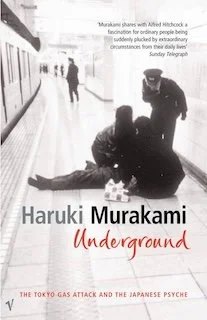
In 1995, an attack was carried out on the Tokyo underground during the morning rush hour by a religious cult known as Aum Shinrikyo. Bags of sarin gas were dropped on subway trains and punctured using the sharpened ends of umbrellas. The result was that thirteen people died, and over 6,000 were injured. In this book, Murakami sets out to interview survivors, and even members of the cult itself, to understand the impact of the attack.
There’s something incredibly calm about the accounts of the survivors, a stoicism and mundanity to their descriptions. A lot of Murakami’s books feature repressed trauma, so it’s natural that he would write about something which has had an impact on the Japanese national psyche.
Haruki Murakami Absolutely on Music: Conversations with Seiji Ozawa
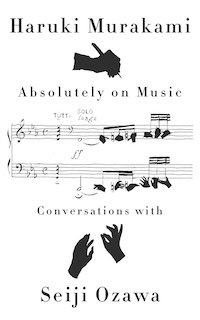
If you’re a constant reader of Murakami, you’ll have noticed that music plays a big part in his novels (‘After Dark’ especially). There are many scenes where a song features on a radio, or a character listens to a record nursing a whiskey. I have a couple of playlists saved somewhere from a music provider that lists all the music that features in Murakami’s record collection, whilst another is simply entitled ‘Haruki Murakami’s late night jazz music’.
We know Murakami previously ran a jazz bar in Tokyo, so he has a love of music. In a series of conversations between Murakami and his friend Seiji Ozawa, a former conductor of the Boston Symphony Orchestra, they discuss everything classical from Beethoven to Gershwin, but also about the blues.
Perhaps it’s because the book has been translated from long-time translator Jay Rubin, but it feels like this is a conversation between two characters sat on stools in a Murakami novel. There’s a familiar cadence to it - indeed, Murakami talks about how a lot of his writing is based on the rhythms of music, and the parallels between composing/conducting and writing
What comes across is the passion that both men have for music, in these talks between two old friends that is both insightful and intelligent. I suppose it wouldn’t be a good entry point for casual Murakami readers, but for anyone who wants to go a bit deeper into his musical obsessions I’d recommend it.
Haruki Murakami Novelist as a Vocation
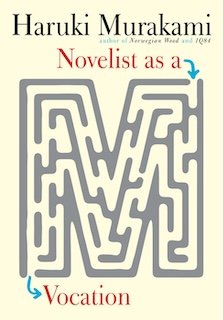
As a sometimes aspiring short story writer, I do love it when an author as renowned as Murakami lets us in to the processes behind his writing. (One of my favourite books to do this was 'On Writing' by Stephen King). This is a collection of essays by Murakami on his own craft and career, his working habits, his thoughts on literary prizes, originality, and the discipline of writing daily.
Famously, the idea struck him at a baseball game — April 1, 1978, at a Yakult Swallows game in Tokyo. He describes the moment he realised he could write a novel as something "fluttering down from the sky" that he "caught cleanly."
It’s perhaps not as much as a manual for wannabe writers as the King book mentioned above, but it’s pretty informative nonetheless. Like many of his books, there’s a conversational tone to the prose, and it felt like he was sitting in a chair in front of me, nursing a whiskey as he talked about his phrase for how memory works for a novelist: ‘A mental chest of drawers’ which you pull out randomly, rather than a single archive that you access. Oh, and I thought it was interesting that he also mentioned how he wrote his first book Hear the Wind Sing in English as he found his Japanese too dense and overwrought.
Of course there’s mention too of jazz, and that free expression he’s searching for in his writing:
I never plan. I never know what the next page is going to be. Many people don't believe me. But that's the fun of writing a novel or a story, because I don't know what's going to happen next. I'm searching for melody after melody.
(Funny, that’s what Stephen King says too, that he enjoys being the first reader of his books as he discovers it as he’s writing.)
I think even if you’re not interested in the craft of writing, you’ll still find something revealing about the man himself, getting a deeper insight into his life.
Summary
So there you go, that’s my list of Haruki Murakami books in terms of where to begin and what to read. I hope it’s been of some use to you if you’re just starting to explore the great man’s work, or if you’re already hooked and wondering what to read next you might have a better idea of where to go next.